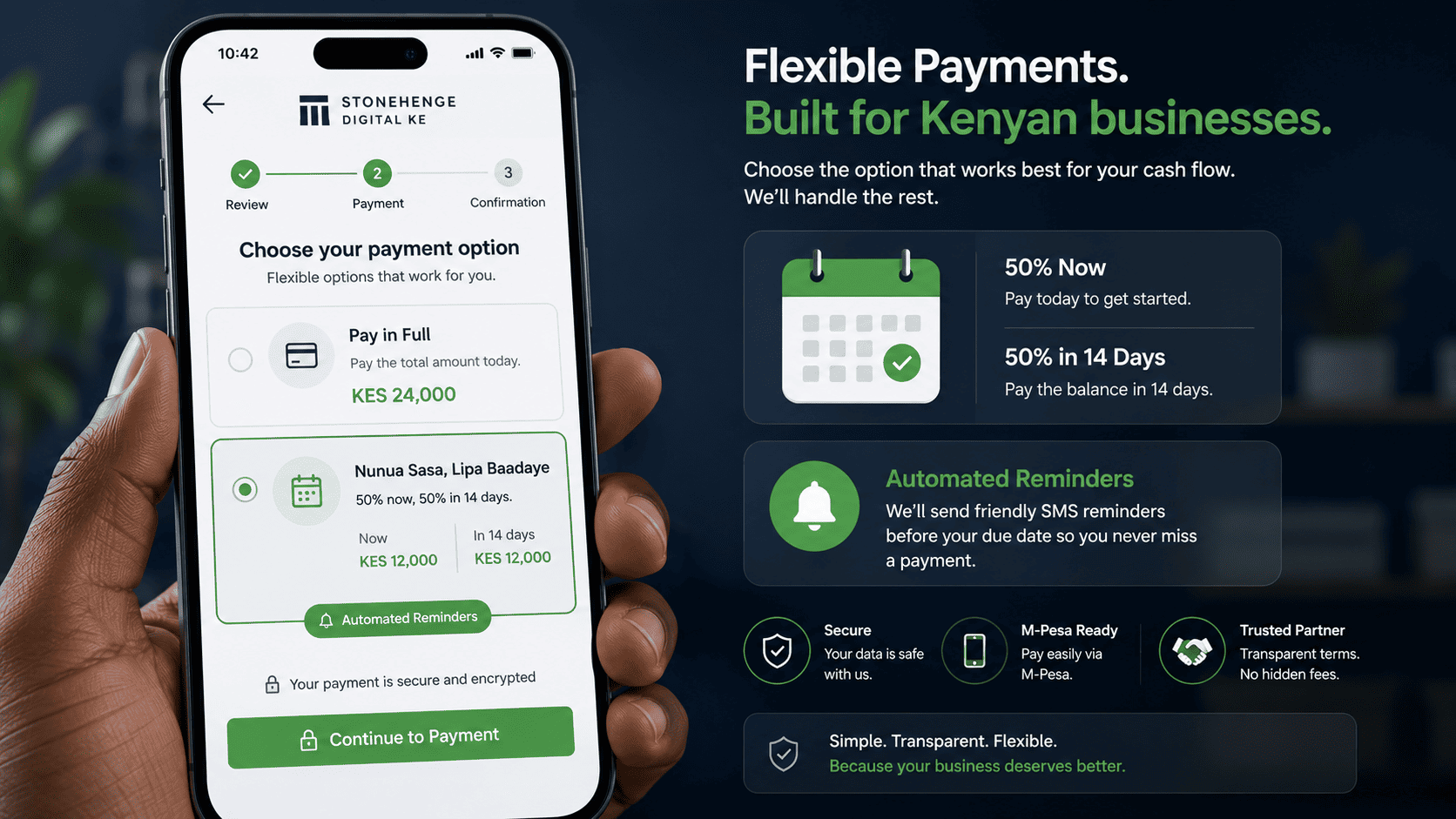
The Payment Option That's Taking Over
Globally, Buy Now Pay Later services like Klarna and Afterpay have exploded. In Kenya, consumers are increasingly comfortable with installments, the old lipa pole pole culture now formalised.
How can a small e-commerce business offer BNPL without taking on massive risk? The answer is a deposit-based installment model using M-Pesa STK Push.
What is deposit-based BNPL?
Instead of a third-party lender, you extend credit yourself. The customer pays a percentage upfront, for example 50 percent, via STK Push. The balance is spread over a set number of weeks, collected via scheduled STK requests or manual M-Pesa reminders.
It is not full BNPL, but it provides the flexibility that high ticket buyers need, without you carrying the full value of the goods on trust.
Most of your money arrives upfront
How to implement it safely
Four decisions keep a good idea from turning into a bad debt. Take them in order.
Start with a high deposit, 50 to 70 percent
This ensures you have covered most of your cost upfront. The risk is limited to the remaining balance, which is a fraction of the sale value.
A 70 percent deposit on a KSh 24,000 item means only KSh 7,200 is exposed, not the whole sale.Clear credit terms and consequences
Display a clear policy at checkout and on the invoice. Transparency prevents disputes, and a written late fee is far easier to apply than a verbal one.
"50 percent deposit secures your order. The remaining 50 percent is due within 14 days of delivery, in two equal installments. If payment is late, a 5 percent late fee applies after a 3 day grace period."Use automated STK reminders
Set up your dashboard to automatically send STK payment requests for the installments on the due dates. The customer receives a prompt, enters their PIN, and the payment is recorded.
No chasing. No awkward phone calls. The system asks on your behalf, on time, every time.Start with high trust, high value customers
Offer the installment option only to repeat customers or those with a verified purchase history. As you build confidence, you can expand eligibility.
A customer who has paid on time three times is a very different risk from a first time buyer.Put the terms in writing
The policy below is short enough to display at checkout and complete enough to prevent arguments later.
What the customer sees before paying
Displaying this before the STK prompt turns a favour into a formal arrangement. Customers respect a clear policy far more than an informal one that changes with the mood of the shop.
The conversion impact
The barrier drops, so the expensive items move
Offering "Nunua Sasa, Lipa Baadaye" can increase conversion rates on high ticket items by 30 to 50 percent. The upfront commitment is lower, so the psychological barrier is reduced.
You will sell more of the expensive items that often sit unsold, which are also the items tying up the most cash in stock.
The expensive items sit
- Full amount required at checkout
- High ticket items ignored
- Cash locked in slow moving stock
- Buyer walks away to think about it
- No follow up mechanism
The expensive items move
- Smaller amount due today
- High ticket items become reachable
- Stock turns into cash and a balance
- Buyer commits with a deposit
- STK reminders collect the rest
You do not need a third party lender to offer installments. A deposit based model on top of M-Pesa STK Push gives your customers flexibility while keeping most of your money safe upfront.
High deposit, written terms, automated reminders and trusted customers. That is the whole system, and it can start this week.
Ready to offer installments without the risk?
Stonehenge Digital builds e-commerce websites with M-Pesa STK Push, deposit checkout, scheduled installment reminders and payment tracking, so you can sell high ticket items with confidence.
Set Up Installment Payments →Interested in E-Commerce Website with M-Pesa?
Let's build this for your business
Sell to any Kenyan with a phone. Full online shop with Safaricom STK Push payment — no card needed.