The 60 Second Check That Changes Everything
Most Kenyan SME owners start their day reacting. A supplier calls, a customer complains, a staff member needs something. The day runs them, they do not run the day.
A simple Daily Flash Report, a one minute review of three key numbers, can shift you from reactive to proactive and, over time, double your profitability.
Two ways to start the same day
Both versions take about a minute. Only one of them leaves you in control of what happens next.
The day runs you
- You open WhatsApp before anything else
- The first call sets your agenda
- Problems surface when customers complain
- Sales shortfalls appear at month end
- Cash surprises arrive when a bill falls due
You set the agenda
- You know your cash before you open
- You see the sales gap while it is fixable
- You pick one priority and act on it
- Problems are caught in days, not weeks
- Cash decisions are made early
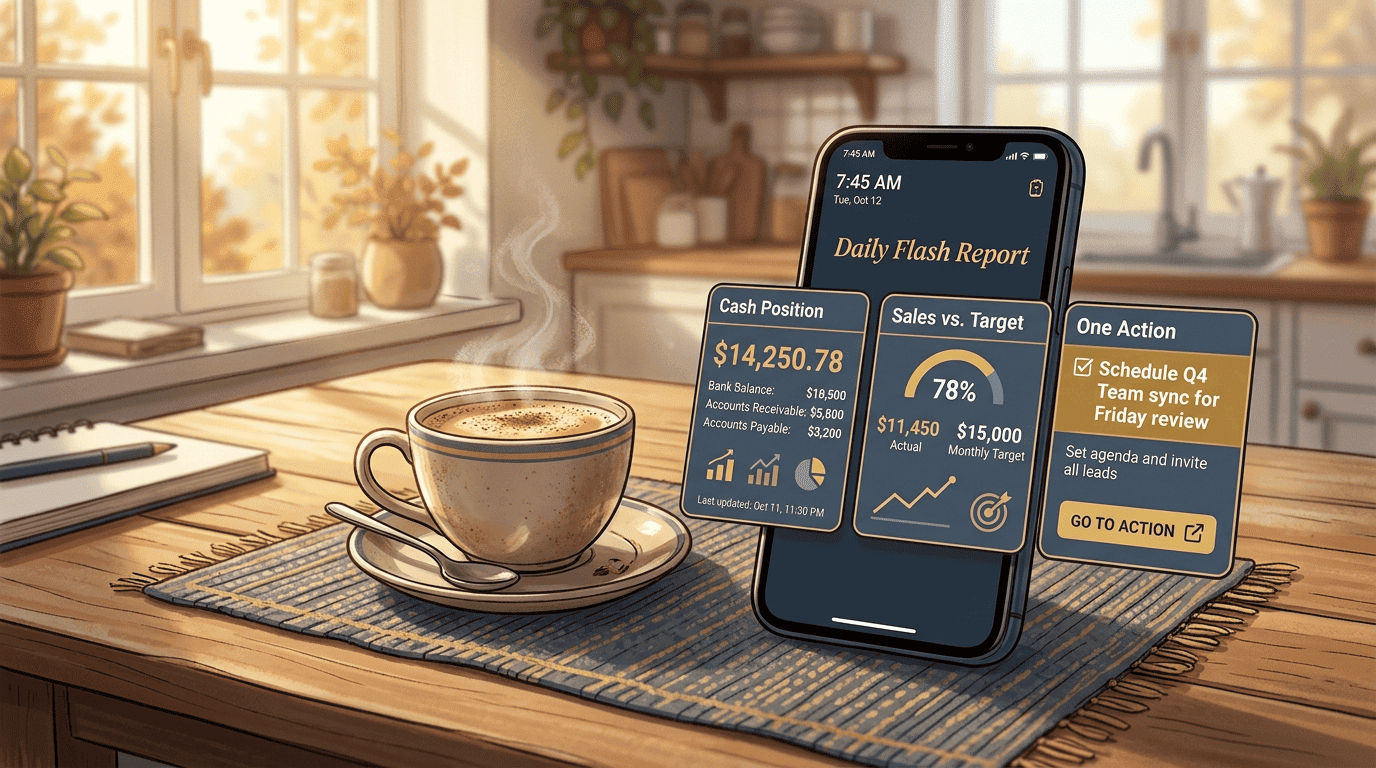
The three number daily flash
Yesterday's cash position
How much cash do you have right now across M Pesa, bank and till combined? This tells you whether you can pay bills today or need to collect from debtors first.
"Cash on hand: KSh 45,000."Yesterday's sales versus target
Did you hit your daily target? If not, what was the shortfall? Seeing the gap on a Tuesday is very different from discovering it on the last day of the month.
"Sales: KSh 18,000. Target: KSh 25,000. Shortfall: 28 percent."One action required item
Look at your dashboard's alert section. Pick one thing that needs your attention today, and make it your priority before anything else distracts you.
"Follow up on overdue invoice from Client X, KSh 12,000."What the whole report looks like
The flash report should be your home screen
Nothing else belongs on the first screen. If you have to scroll or click to find these three, the habit will not survive a busy week. Put them where your eyes land first.
How to make it a habit
Four steps that make it automatic
The alarm and the home screen are doing most of the work. Remove either one and the habit quietly disappears within a fortnight.
The compounding effect
A single morning of clarity is pleasant. The value comes from what happens when the same sixty seconds repeat every working day.
You notice patterns
Sales dips on specific days, cash tightens at predictable points, the same invoice keeps appearing on the action list.
You act earlier
Debtors are chased before they age, shortfalls are addressed within days, and cash decisions stop being emergencies.
Decisions get sharper
You start pricing, staffing and stocking based on what the numbers actually show, rather than on how the week felt.
A practical start tomorrow morning
Five steps to set it up today
- Decide the exact time your flash report will run, and set a daily alarm
- Work out where your cash figure lives, and who confirms it
- Agree your daily sales target, so the second number has something to compare against
- Identify where action items currently surface, and put that list on the same screen
- Run it once manually tomorrow, so the habit starts before the software is ready
What this actually changes
- You stop discovering cash problems on the day a bill is due
- You catch a sales shortfall while there is still time to respond
- You start every day with one clear priority instead of reacting to whoever calls first
- You build a record of what was noticed and what was done about it
- You make decisions from numbers rather than from how the week felt
The summary
Start your Daily Flash Report tomorrow. One minute. Three numbers. Transform your business.
You know your financial position, you know your sales performance, and you know your number one priority. Over weeks and months, this focus compounds.
Ready to start every day with clarity?
Stonehenge Digital builds business management dashboards with a flash report home screen, live cash position, sales against target and a single action list.
Set Up My Daily Flash Report →Interested in Business Management System?
Let's build this for your business
Replace spreadsheets, paper records, and WhatsApp chaos with a custom system built for exactly how your business works.