The Overlooked Overhead
For many Kenyan SMEs, electricity is a significant fixed cost. But is every kilowatt being used productively? The freezer running overnight, the neon sign on in daylight, the equipment left on standby. These small leaks add up.
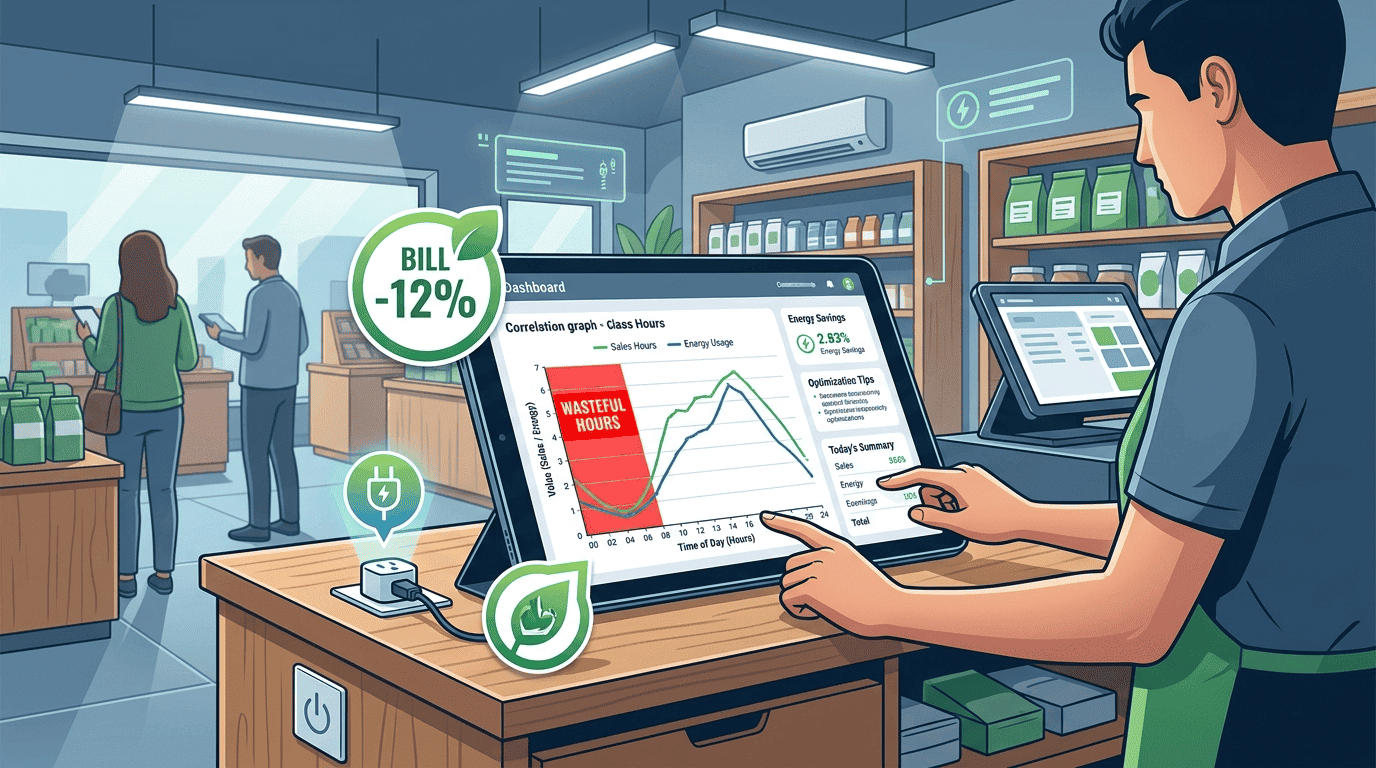
Without data, you cannot see these leaks. A business management dashboard that tracks operating hours and correlates them with sales can reveal wasteful energy patterns and help you cut your bill by up to 15 percent.
The small leaks nobody notices
None of these is dramatic on its own. Each one runs quietly, every day, on a bill that feels fixed because nobody has measured it.
Four leaks that repeat daily
Individually these feel trivial. Across a full year and every appliance in the building, they become one of the easiest savings available to you.
How the dashboard finds energy waste
Log operating hours by equipment
Using simple smart plugs or manual checklists integrated into the dashboard, track when each major appliance is on and off. The dashboard records the hours.
Freezer, oven, lights, sign, air conditioning. Each one gets an on time and an off time.Correlate with sales revenue
The dashboard compares energy usage hours against actual sales hours. If your shop is open until 8 PM but sales drop sharply after 6 PM, it will show you are paying for lights and equipment during low revenue hours.
Maybe closing at 6 PM saves two hours of electricity every single day.Identify idle equipment
If the dashboard shows a freezer running 24 hours but the stock inside is only accessed during business hours, you might consider a timer or a more efficient model. Same for that computer left on overnight.
Running 24 hours for stock that moves 10 hours a day is not resilience, it is waste.Set alerts for anomalies
The dashboard can alert you when usage spikes unexpectedly, so a single forgotten switch does not quietly cost you for a month.
A night time spike that repeats three times in a week usually points to one appliance, not a billing error.What the correlation actually shows you
A typical trading day
Two hours of full operating cost, every trading day, for a fraction of the revenue. That is the pattern a monthly bill can never show you.
An alert that pays for itself
A single alert like this, caught on the morning it happens, prevents a month of the same mistake repeating unnoticed. The value is not the alert itself. It is the habit of noticing.
What a small change is worth
A small restaurant in Nairobi tracked its operating hours and made two changes. It turned off the outdoor sign during the day, and switched the freezer to a timer that powered it down for four hours at night. The electricity bill dropped by 12 percent in the first month.
- Change 1 Sign off in daylight Zero cost to implement, immediate saving
- Change 2 Freezer timer at night Small hardware cost, recurring saving
- Change 3 Measured, not guessed The dashboard proved the result
A practical start this week
Five steps that cost almost nothing
- List every appliance that draws meaningful power, from the freezer to the sign
- Note the hours each one is genuinely needed, and the hours it actually runs
- Compare the last two electricity bills against your trading hours for the same period
- Pick the single most obvious waste and switch it off for one week
- Check the next bill and record the difference, so the next decision is based on evidence
Where a dashboard makes the difference
- Hours tracked per appliance, not just a single monthly total
- Energy usage placed beside revenue for the same hours
- Idle equipment surfaced rather than buried in a bill
- Anomalies flagged the morning after, not discovered at month end
- A record of changes and their measured effect over time
The summary
Your electricity bill is not a fixed fact. Use data to uncover waste and reclaim those profits.
Track hours, compare them with revenue, and act on the one pattern that repeats every day. The savings usually arrive faster than the hardware takes to pay for itself.
Ready to see where the kilowatts go?
Stonehenge Digital builds business management dashboards that track operating hours per appliance, compare them with revenue, and alert you when usage spikes.
Track My Energy Costs →Interested in Business Management System?
Let's build this for your business
Replace spreadsheets, paper records, and WhatsApp chaos with a custom system built for exactly how your business works.