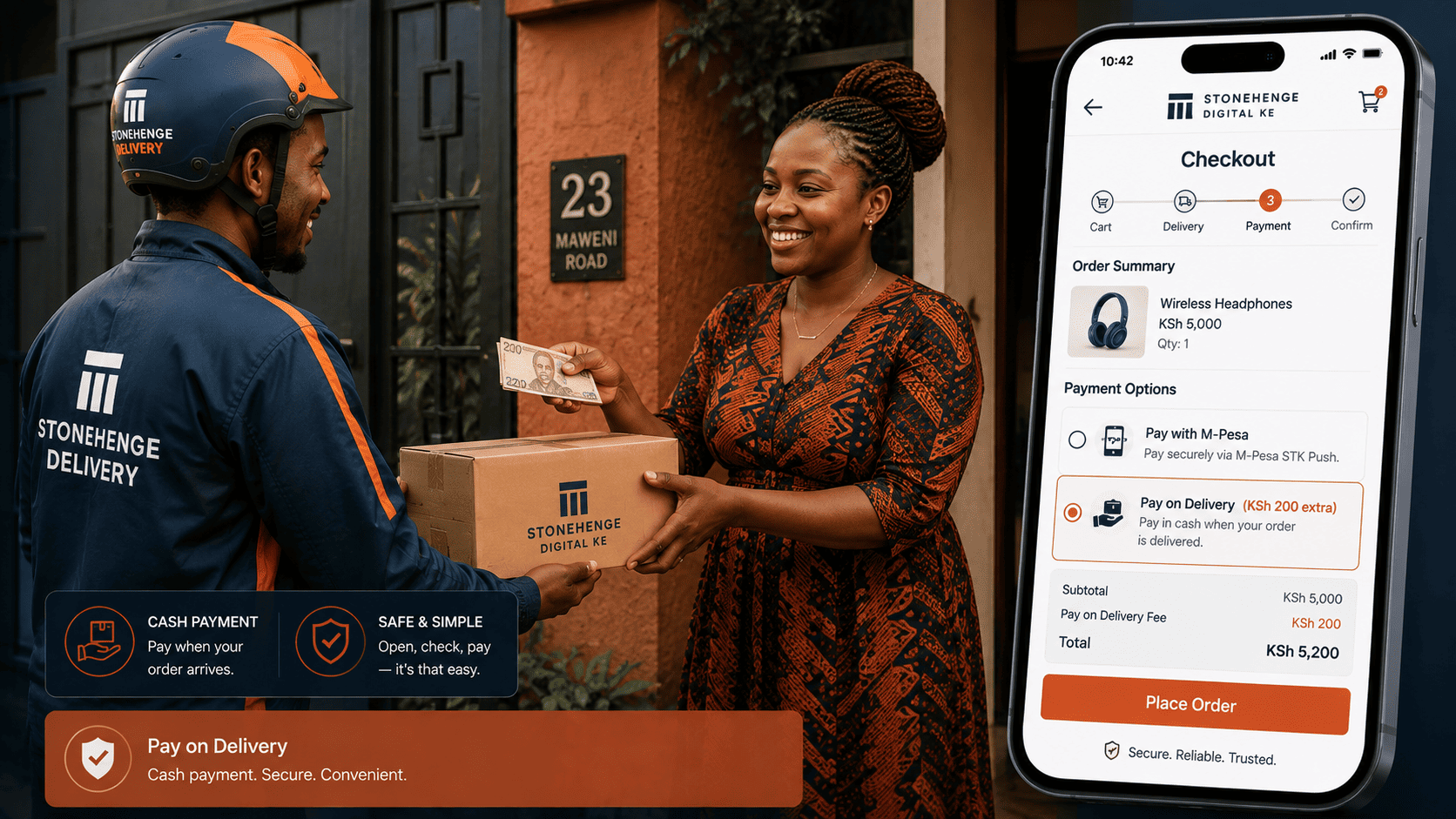
The Fear That Blocks Sales
Many Kenyan online shoppers are hesitant to pay upfront for a product they have not seen, from a seller they do not know. So they abandon their carts.
Offering Pay on Delivery, also known as Cash on Delivery, can unlock this trust deficient market segment. Yes, it is risky. But the upside can be significant.
What you lose by offering prepaid only
Prepaid is cheaper to run. But it quietly filters out every customer who is not yet ready to trust you. On a first order, that is a large share of the market.
Low risk, narrow reach
- First time buyers hesitate and leave
- High ticket items stall at checkout
- Outside major cities, trust is thinnest
- You never learn why the cart emptied
- Lower returns, but fewer first orders
Higher risk, wider reach
- New customers get a risk free first step
- Large purchases become easier to commit to
- Regional buyers can try you safely
- Refused deliveries become visible data
- More orders, with a cost you can control
When POD makes sense
It is not right for every product or every customer. These three situations are where it earns its place.
- Situation 1 First time customers POD gives them a risk free way to try your business.
- Situation 2 High ticket items Paying KSh 50,000 upfront is a hard ask. Paying upon inspection is easier.
- Situation 3 Customers outside major cities Trust is even lower in areas with less e commerce penetration.
How to offer POD safely
Four controls turn POD from a gamble into a managed policy. None of them require new software if your checkout already supports order options and SMS.
Set a POD fee, optionally
To offset the risk, charge a small premium for POD. Many customers are willing to pay this for the peace of mind.
"Pay on Delivery: KSh 200 extra, to cover the risk of returns."Require a partial deposit for high value items
For items over KSh 10,000, require a 20 to 30 percent deposit via STK Push to cover your dispatch cost. This ensures the customer is serious and reduces your loss if they refuse delivery.
A KSh 40,000 order with a KSh 10,000 deposit already covers the transport cost if the delivery is refused.Use a digital confirmation before dispatch
Before dispatching a POD order, send an SMS or WhatsApp message asking the customer to confirm and agree to pay on delivery. This creates a record of consent and reduces frivolous orders.
"Confirm your order and agree to pay KSh X on delivery. Reply YES to confirm."Enforce a clear return policy
State plainly what happens if a delivery is refused. This deters serial returners and makes the terms fair for genuine customers.
"If you refuse delivery without a valid reason, you will be charged a restocking fee of KSh 300."Be honest about the trade off
What POD can cost you
- Refused deliveries and return trips
- Cash handling for the rider
- Some customers who never intended to pay
- Extra admin to track unsettled orders
What POD can unlock
- First orders from cautious buyers
- Higher value baskets on large items
- Access to less served regions
- A pool of customers who later prepay
The trust dividend
POD is a first step, not a permanent discount
Offering POD builds trust with a segment of the market that would otherwise never buy from you. Once they experience your quality and reliability, many will switch to prepaid for future orders, especially if you incentivise it.
The goal is not to run a cash business forever. It is to convert cautious first buyers into confident repeat customers who no longer need the safety net.
"Prepay and get 5 percent off."A practical launch plan
- Start POD on first orders only, so repeat buyers move to prepaid
- Apply the deposit rule automatically above a set value
- Keep the POD fee visible at checkout, not hidden in delivery charges
- Send the consent message every time, without exception
- Track refusals by product, location and rider to find patterns
The summary
Do not let fear of risk block you from a whole market segment. Offer POD with the right controls, and expand your customer base.
Prepaid only filters out the cautious buyer. POD with a fee, a deposit rule, a consent message and a clear refusal policy brings them in without leaving you exposed.
Ready to open the cautious market?
Stonehenge Digital builds e commerce checkouts with pay on delivery options, STK Push deposits and automatic consent confirmations before dispatch.
Set Up Pay on Delivery →Interested in E-Commerce Website with M-Pesa?
Let's build this for your business
Sell to any Kenyan with a phone. Full online shop with Safaricom STK Push payment — no card needed.