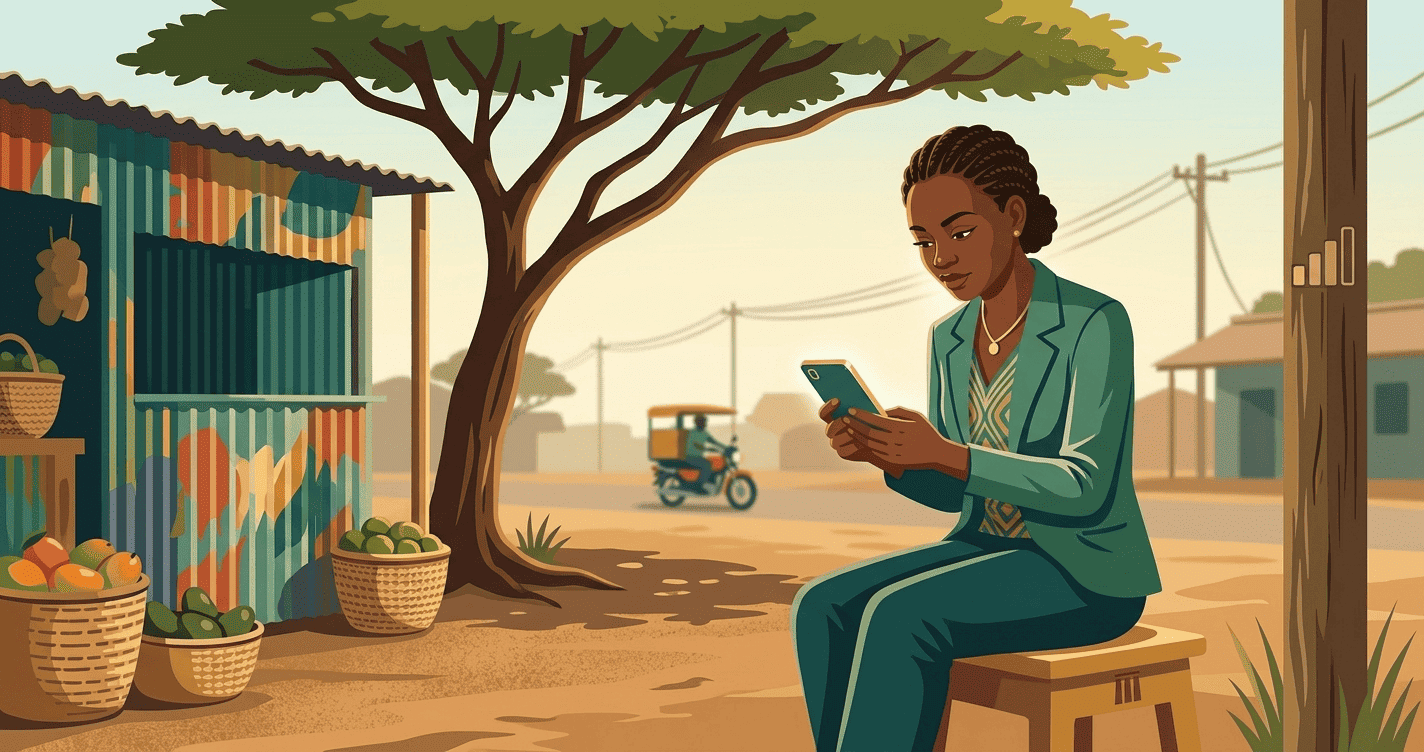
Designing an LMS for Kenya's Real Connections
Bandwidth is not a side consideration for East African e learning. It is a core design constraint.
A learning platform designed and tested on fibre in Nairobi's CBD can behave very differently for a student on a 3G connection in a rural sub county, or a teacher tethering off their phone during a power outage.
- Scenario 1 Fibre in the city
- Scenario 2 3G in a rural sub county
- Scenario 3 Tethering during an outage
Where most LMS setups struggle
Out of the box, a lot of course content assumes reliable, cheap data. The assumptions are rarely written down, but they are baked into every file that gets uploaded.
What is often uploaded without thinking
On a limited data bundle, that translates directly into frustration, abandoned lessons and unnecessary airtime cost for students and parents.
What we tune for Kenyan classrooms
None of these are complicated settings. They are deliberate choices made at build time, before students ever log in.
Image and asset compression
Course pages load quickly without visibly sacrificing quality. A photograph of a diagram does not need to be a 4MB file.
Text first course design
Video is treated as optional enrichment rather than the only way to access a lesson. A student who cannot stream can still learn.
Downloadable materials
Students can save a PDF or worksheet once and study offline, rather than reloading the same page repeatedly on a metered bundle.
Off peak scheduling guidance
Live sessions timed around when data costs and network congestion are typically lower.
Mobile first layouts
Most Kenyan learners will access the platform from a phone before they ever touch a laptop. The design should start there.
Why this decides whether the platform survives
The technical choices above are not optimisation for its own sake. They determine whether students keep coming back after the first week.
Light, clear, offline friendly
Lessons load, students finish them, and the platform becomes part of the routine rather than an obstacle.
Heavy, slow, data hungry
Students open it once, watch it stall, and stop coming back. Nobody formally decides to stop using it. It just fades.
Not exotic engineering
None of this is exotic engineering. It is a deliberate refusal to assume every learner has the same connection quality as the person building the course.
Getting it right is often the difference between an LMS that gets used every day and one that quietly gets abandoned after week two.
Want a platform built for real connections?
Stonehenge Digital KE configures and hosts Moodle with Kenyan bandwidth conditions in mind, from compression and offline materials to mobile first layout.
Explore the Moodle LMS Hosting Service →Interested in Moodle LMS Hosting?
Let's build this for your business
Fully hosted Moodle LMS on your own custom domain — built for Kenyan and East African schools, colleges, TVETs, and training providers.