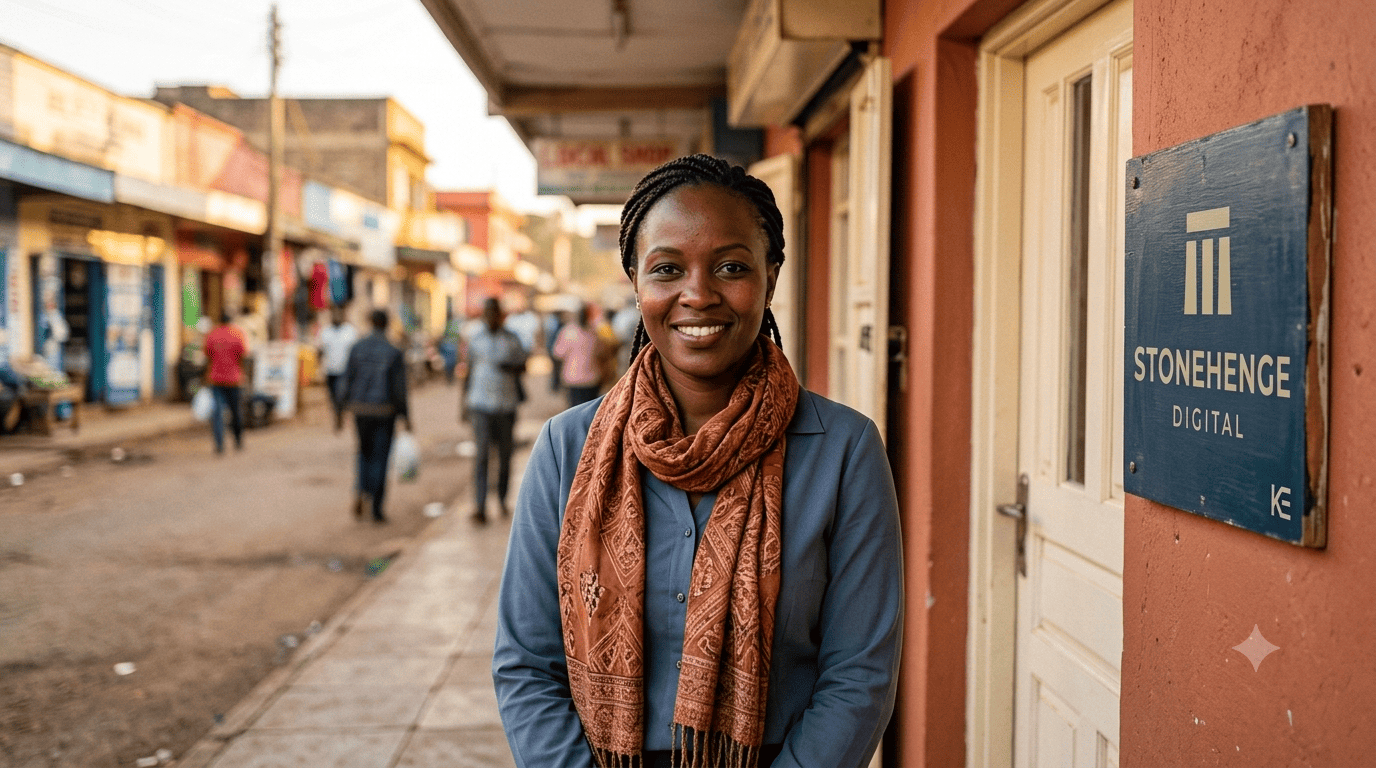
The Invisible Owner
You have a beautiful website. It lists your services, showcases your projects, and has a professional colour scheme. But nowhere on the site, not on the homepage, not on the About page, is there a photo of you, the founder. No name of the owner. No story. Just a generic "We are a leading provider..."
In the Kenyan B2B and tender world, this anonymity is toxic. Procurement officers, NGO managers, and even high-net-worth individuals want to know who they are doing business with. When the owner is hidden, the subconscious message is: "If something goes wrong, there is no one accountable. This could be a briefcase operation."
Why visibility converts
In our analysis of 50 Kenyan SME websites, the results were undeniable. Trust is transferred from a person, not a logo.
Websites with a clear founder photo, name, and professional background on the homepage or About page had a 48% higher enquiry rate than those without.
Hidden and Suspect
- Only uses "We" and "The Company"
- No face, no name, no story
- Feels like a briefcase operation
- No one to hold accountable
- Lower conversion rate
Trusted and Accountable
- Full name and functional title
- Real, candid photo of the founder
- Shares the "Why I Started" story
- Direct contact details available
- Higher conversion rate
How to show up authentically
Four practical steps to turn your website from a faceless brochure into a trust-building machine.
1. The Founder Photo: Real, Not Staged
Forget the stiff passport photo. Use a high-quality image of you at work: at your shop, on a construction site, or in front of your laptop in a real Kenyan office. A photo at a recognisable Nairobi landmark adds local context.
Pro Tip Skip the generic stock background. Show your actual environment.2. The Founder's Name and Title
Do not hide behind "The Team." Your homepage hero or About page should feature your full name and a functional title.
Example "James Mwangi, Lead Engineer & Founder." Not "CEO" if it is just you. Be accurate.3. The "Why I Started This" Micro-Story
In 3 to 4 sentences, share the specific moment that made you start the business. This humanises you and aligns your mission with the client's fear.
Example "I started Savanna Logistics after my cousin lost KSh 300,000 in a tender because his freight forwarder disappeared. I knew there had to be a more accountable way."4. The "Where to Find Me" Reassurance
Add a line that explicitly states your physical presence and direct reachability. This single line can be the deciding factor for a procurement officer choosing between two vendors.
Example "I personally oversee every project from our office in Westlands. You can reach me directly at [email protected]."The "Solo Founder" advantage
Small Size is a Strength
Many large companies have faceless bureaucracies. Your small size and direct owner involvement is a strength, not a weakness. Flaunt it. When you win a client, they get the founder's personal attention. That is a selling point.
People do not do business with websites. They do business with people. An invisible owner signals risk and a lack of accountability.
Stop hiding behind your computer. Show your face. Tell your story. Be reachable. That is the ultimate trust hack.
Ready to put a face to your business?
Stonehenge Digital builds organisational websites with founder-focused About pages, trust signals, and human-centric layouts that turn visitors into loyal clients.
I Need Help Building Trust on My Site →Interested in Portfolio & Organisational Website?
Let's build this for your business
A professional, mobile-first website that makes your business look credible and gets found on Google.